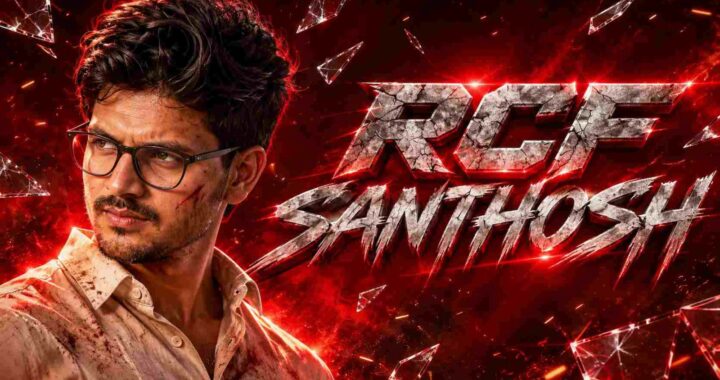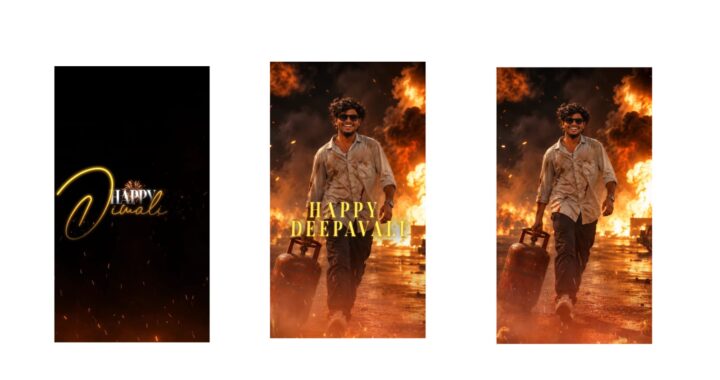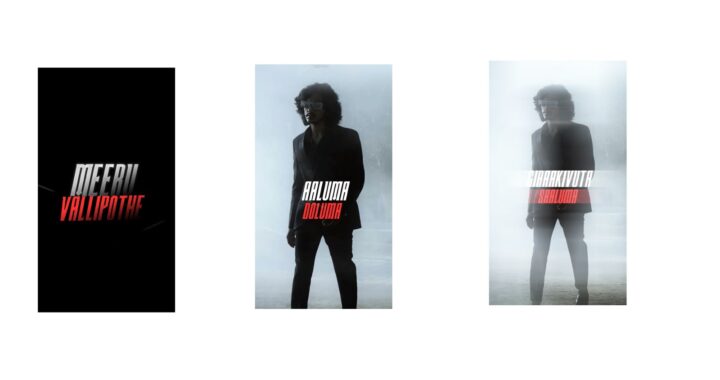
DaVinci Resolve, Premiere Pro, and After Effects video editing is now being taken over by AI. Do you think this is an overstatement? Let me show you proof. Look at this animation. To do this in After Effects, it would take a good editor at least four to five hours. What I did here was done with just one prompt within a few minutes. In my last few videos, I didn’t even manually place a single keyframe. The cuts, colors, captions, and motion graphics were all done by Claude Code. The era of opening software, dragging onto the timeline, and spending hours setting keyframes is over. Now, all you have to do is state it clearly. If you are a creator, you don’t need to wait for an editor. If you are an editor, your speed will increase threefold. If you are a student, this will be your next income-generating skill. In this video, we will talk about the exact setup cost, which laptop is sufficient, which subscription to get for Telugu videos, and how much you can realistically earn in the Indian versus international markets—all with real numbers.
Another thing: I am attaching a document in the description. To install all the Claude skills I use in this video, just copy that document and paste it directly into your Claude. Claude will understand what you want, and it will take care of the entire setup. Don’t do the heavy lifting yourself. Many people say that Claude’s output looks generic, but I will show you how to teach your personal taste to Claude with just one prompt. That is the real game-changer. Let’s go.
First, what is Claude Code? Let me explain it simply. ChatGPT is like a friend who gives you advice; it tells you to do this or do that, but you still have to do the actual work yourself. Claude Code, on the other hand, sits inside your laptop and does the actual work. It opens your video files, runs tools like FFmpeg, writes code for animations, renders it, and hands you the final mp4 file. There is only one condition: if you give a vague prompt, you get a vague output. If you describe it clearly, you get a professional output. You are the director, and Claude is your crew. Second topic: Creators, stop waiting for editors, and this story is for you. We shot a video and sent it to the editor; it took three days just to get the first version. Then we wanted to change a caption, make a cut, or reduce the music, which took another two days—by then, the trend was already over. There are four big advantages for creators using Claude. One is speed: shoot in the morning, upload in the evening, all on the same day. Two is control: if you want a change, you just type one line, and a new version is ready in two minutes. Three is cost: in India, a good editor charges 15k to 40k monthly, whereas the Claude setup costs around 2500 to 4500 monthly, that’s it. Four is consistency: if the editor changes, the style changes, but once you teach your style to Claude, every video comes out with the exact same look. If you are a creator who just started and don’t have the budget for an editor, this is the perfect start for you. Once your channel grows, if you want an editor, you can hire one who uses Claude.
Third topic: Now let’s see how the skill shifts for editors. Let’s compare the manual work you do daily versus Claude. Cleaning raw footage: for 40 minutes of raw footage, manually removing pauses, fillers, and repeated lines takes 2 to 3 hours. For Claude, once I state my rules and save them as a skill—keep the pauses tight, keep the better take among repeated lines, make the speed 1.1x, and keep the voice at -14—it follows the exact same rules for every video. Word-by-word syncing for captions takes one to two hours manually, but with Claude, it is done in a few minutes. For motion graphics, you have to create keyframes for every title in
After Effects, but in Claude, it uses Remotion, writes the code, and handles the animation itself. If you want a change, you don’t use a mouse; you use words—like asking a title to appear faster, that’s all. Color grading is the same grade for all clips with just one instruction. Now, the actual point: where does your value shift? It shifts from keyframes to taste, and from the mouse to the mind. You have to tell the AI which hook to place, where the pause should be, and at what moment the music should drop. An editor who edits two videos daily can deliver two to three times more in the same timeframe using Claude. Same hours, more clients, more income. Software skills have an expiry date, but taste does not.
Now, let’s look at the main thing: what do you need for the setup, and how much does it cost? First, the cost of a Claude Pro subscription in India is around ₹2,000 monthly; Claude Code comes within this plan and is not available in the free plan. The second cost is ElevenLabs, which is highly important for Telugu videos, and we will talk about the details later. Now let’s talk about the free tools: FFmpeg is used for cutting audio and coding. Remotion is used to design motion graphics using code; this tool is free for individuals and companies with up to three members. DaVinci Resolve free version is for final touches, the YouTube Audio Library is for music, and Mixkit is for sound effects. Don’t struggle to install these either; just paste the document from the description, and Claude will install them itself. The total monthly investment comes to around ₹2500 to ₹4500. Now let’s discuss laptop specifications. Officially, Claude Code requires just 4GB of RAM and macOS 13 or above, or Windows 10 or 11, because the brain runs in the cloud so a GPU is not necessary. However, video rendering happens on your laptop, so let’s talk about real-world specs. For Mac, the minimum requirement is an M1 chip with 8GB of RAM, but for 4K long-form videos, an M2 or above is mandatory along with 16GB RAM and 512GB storage as the best option; avoid old Intel Macs. For Windows, a minimum of an i5 10th Gen or Ryzen 5 with 16GB of RAM is best, and for a smooth experience, an i7 or Ryzen 7 plus an RTX 3050 or above is ideal. Windows also requires Git for Windows. One personal mistake that gave me more trouble than the specs was my storage; a 4K project easily takes up 30 to 50GB, so keep at least 100GB of free space or use an external SSD as a must.
Now let’s talk about ElevenLabs Scribe in detail, as this is the most important part for our Telugu creators. For captions and cuts, Claude needs to know exactly which word was spoken at what second; this is called transcription. For English, a tool called Whisper is sufficient, and it is a free, open-source tool. However, in Telugu, words come out wrong, and sometimes the same line loops and repeats; I tried it and it didn’t work out. That is why ElevenLabs Scribe is important; it understands Telugu very well and aligns every word with the timing. The Startup plan is enough to begin, costing just $6 monthly, which is around ₹530, and it includes a commercial license. If you make more videos and run out of credits, only then should you upgrade the plan. A simple tip: do not generate music and sound effects in ElevenLabs, because your credits will finish as soon as you look at them; use free libraries instead. Now for the secret: how to teach your style to Claude. Suppose an editor joins your team; what do you do on the first day? You show them your videos and tell them our style should be like this or like that. Give the same references to Claude.
The more references you give, the better Claude will understand your design. Claude has a feature for this called ‘Skill’. A skill is like a permanent rulebook you give to Claude; once created, it remembers it every time. Step one: select three to five reference videos in the style you like; they should all be in the same style, because mixing them will confuse Claude just like a human. Step two: paste the prompt shown here, which is also available in the document. Step three: before the full render, ask it to show three style frames first; if you like the look, only then have it do the full edit. Step four: this is the actual magic—if you don’t like something in the edit, have it fixed and tell it to save this rule into the skill. The skill sharpens with every video. After 10 videos, Claude will perfectly understand your taste. I have saved five styles like this for my channel: one for shorts, one for long-form, one for ads, and others for clients. The same technique applies to clients: once you input each client’s own style of videos, their colors, fonts, and tone, every subsequent video of theirs comes out with the exact same brand look within minutes. Now, suppose you don’t know English. Don’t worry about the prompts being in English. Let me tell you a technique: open ChatGPT, press the microphone, and describe in Telugu how you want your video to look. At the end, add a line saying, “Convert this into a clear, detailed English prompt for a Claude Code video editing.” You will get a perfect English prompt, then just copy and paste it. However, learn editing vocabulary in the long term, because the more precise your prompt is, the better the output will be. To start, these 10 words are important: B-rolls, punch-in, J-cut and L-cut, lower third, kinetic typography, easing, safe zone, aspect ratio, color grade, and LUTs. The future belongs to prompting and the English vocabulary you invest in.Now, let’s talk about career and earnings: Indian market versus international market. This is the part everyone has been waiting for because money is involved. Right now, very few people in Telugu are editing with AI, as most editors are still working manually. If you learn it now, you will get a few years of a head start.
Taking realistic ranges from 2026 market research, beginners in India are charging ₹500 to ₹1,000 per reel. With experience, it goes from ₹800 to ₹2,500, and with premium motion graphics, it ranges from ₹3,000 to ₹8,000. For a premium long-format video of 10 to 15 minutes, it is ₹8,000 plus, and you can expect a monthly retainer of ₹15,000 to ₹40,000 from a single client. For international clients, it is $30 to $150 per short, $150 to $600 for a long format, and a monthly retainer of $800 to $2,500. Honestly, it might take two to three months to get your first international client because competition on Upwork comes from the whole world, so reach out manually; a portfolio, communication, time zone discipline are a must. However, one international retainer client is equal to three to four clients in India. Now let’s see how to start an agency with this Claude video editing skill, moving from freelancing to an agency in three months. One is content repurposing: podcasters, coaches, and founders need to convert one long video into 15 to 30 shorts. I have mentioned many times on my channel that this is the fastest business model with Claude. Two is local social media: you can sell reels plus monthly posting packages to local businesses like restaurants, gyms, clinics, and real estate. Three is a full content agency: handling scripting, editing, thumbnail designing, and posting—more work means a higher price. In India, four clients at ₹25,000 each equals ₹1,00,000 in monthly revenue. Even if you calculate Claude’s max plan plus ElevenLabs costing around ₹14,000, the net profit is around ₹86,000. And if it’s international clients, two clients at $1,000 each is almost equal to ₹1.75 lakh in revenue. However, these numbers won’t come in the first month; they come if you consistently build a portfolio and work for 6 to 12 months. Editing has become easy, but getting clients, managing deadlines, and communication—that is the actual game in the agency model. How to start? Pick a niche, like Telugu podcasters and shorts, and build a brand skill for that niche. The before-and-after videos built with that skill will be your sales pitch. Finally, if you have watched up to this point, it means you want to make something of your life, and all the best for that. Shooting is something everyone knows how to do now, and editing is just one prompt away, but the taste is yours—AI cannot give you that. If you are a creator, stop waiting; if you are an editor, upgrade yourself; if you are a student, start today. Remember, the setup document is in the description; copy and paste it to your Claude, and Claude will install all the skills itself. Heavy lifting: zero. Edit your first Claude video, tag me on Instagram @bhanudeep.telugu, and I will watch it personally.